
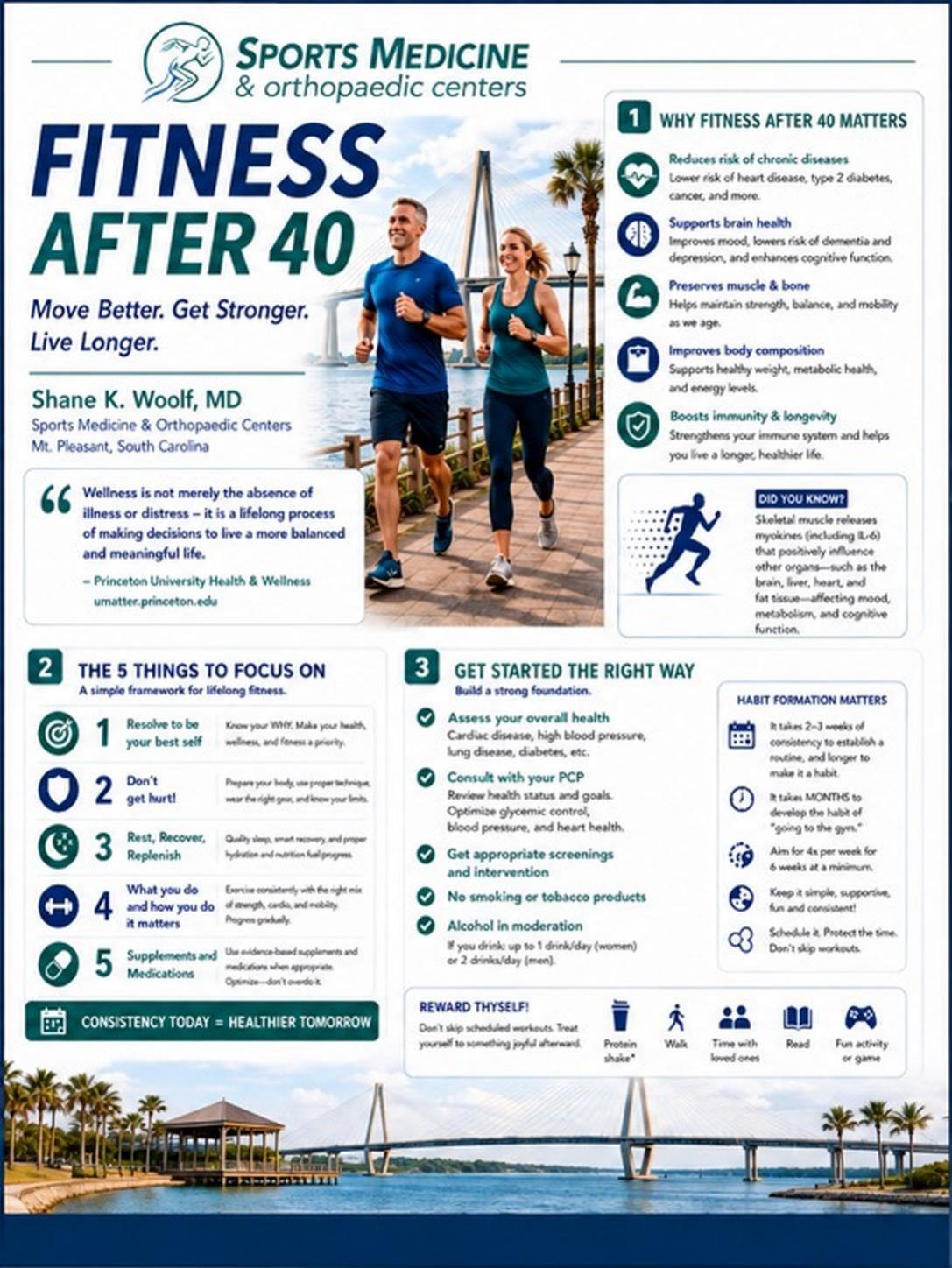
Healthy movement2 pages
Fitness After 40
Strength, cardio, mobility, recovery, nutrition, and habits that support lifelong movement.
© 2026 Shane Woolf, MD
Dr. Shane Woolf · Mount Pleasant, SC
Get back to tennis, golf and work.
Find out whether the next step is surgery, an injection or neither.
I'm a board-certified, fellowship-trained orthopaedic sports medicine surgeon with a focus on shoulders, knees and joint preservation. I also offer orthobiologics, so we can weigh non-operative and surgical options in the same conversation.
We start with what you want back — your swing, your serve, your sleep or your everyday routine — and a careful evaluation. Reasonable conservative care comes first whenever appropriate. If it hasn't helped enough, I'll explain what else may help, what it can't do and why I'd recommend it.
More than two decades of experience · Sports medicine & arthroscopy fellowship · Board-certified in orthopaedic surgery with sports medicine subspecialty certification
These are common patterns we hear from active adults. Pick the area that’s bothering you, then tap the photo that feels most like you.
Where is it bothering you?
Composite examples for general education only. They are not medical advice, diagnoses, or patient testimonials.
Your goals. Your options.
Seeing a surgeon doesn't commit you to surgery. An injection isn't the automatic answer either. My experience with both surgical care and orthobiologics helps us weigh the options in context.
Your serve, your swing, a comfortable night's sleep, or getting through your workday. I start with what matters to you and what you've already tried.
A careful exam and appropriate imaging help explain the source of your pain, your strength and stability, and what your joint or tendon needs.
We weigh reasonable conservative care first whenever appropriate. If it hasn't helped enough, we discuss whether orthobiologics may have a role or whether repair, restoration or reconstruction is the better next step — and why.
What treatment is right for you?
3 quick stepsThe quiz runs in your browser. Your answers are used only to show you a suggested path and are not stored as medical information — nothing is saved, downloaded, or shared.
This is not a diagnosis or medical advice. It is guidance on what to expect from a consultation. If you have chest pain, shortness of breath, or neck, shoulder, or arm pain that could be heart-related, call 911 or go to the nearest emergency department. The same applies to sudden weakness with speech changes or facial drooping — those can be signs of a stroke.
Start wherever feels most natural:
01
Non-surgicalPRP, microfat, BMAC and focused shockwave, selected after a careful exam and imaging review.
Learn more →02
Non-surgicalPRP, BMAC and microfat for selected shoulder and knee cartilage conditions after reasonable traditional care.
Learn more →03
Non-surgicalA non-invasive option for selected shoulder, elbow, hip, knee and Achilles tendon problems.
Learn more →04
SurgicalRestoring stability for rotator cuff tears, labral injuries and instability.
Learn more →05
Non-surgical & surgicalNon-operative care and orthobiologics through arthroscopic repair and cartilage restoration.
Learn more →06
Non-surgical & surgicalJoint-preserving care for early wear, with replacement when the shoulder is truly worn out.
Learn more →Download full-color infographics and physician-reviewed guides for procedures, conditions, exercise, surgery, and recovery.
Strength, cardio, mobility, recovery, nutrition, and habits that support lifelong movement.
© 2026 Shane Woolf, MD
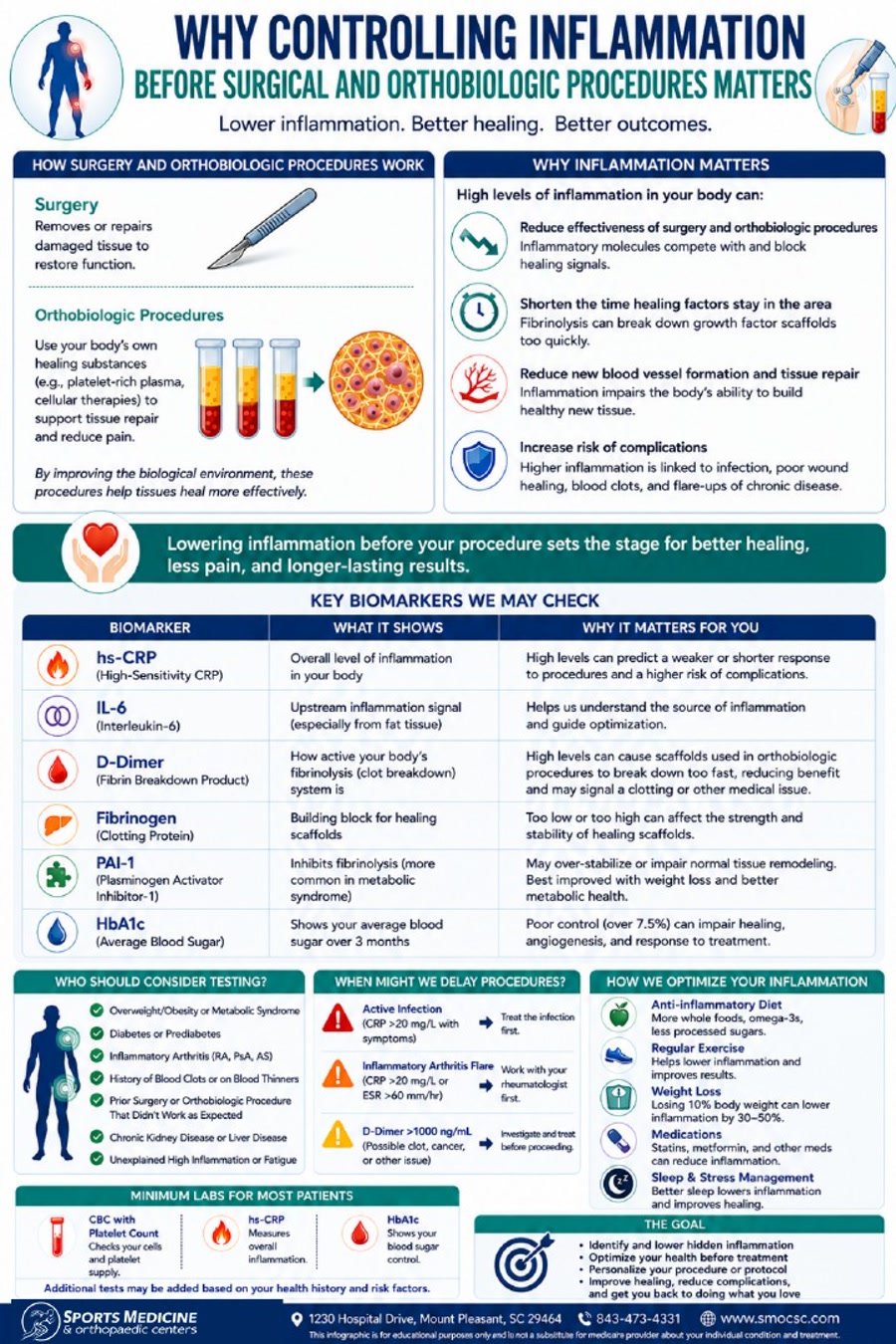
A visual overview of inflammation, healing, and health factors around surgery and orthobiologic procedures.
© 2026 Shane Woolf, MD

© 2026 Shane Woolf, MD
Short talks on treatments, recovery and staying active — new videos appear here as they're posted.
New articles will appear here.
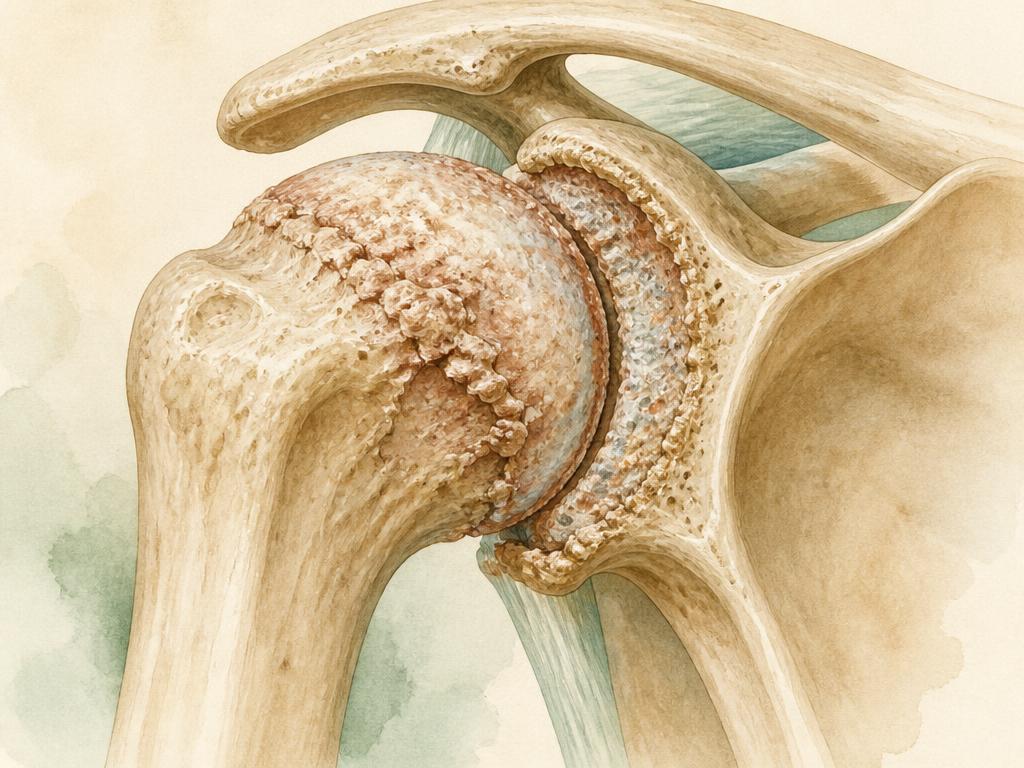
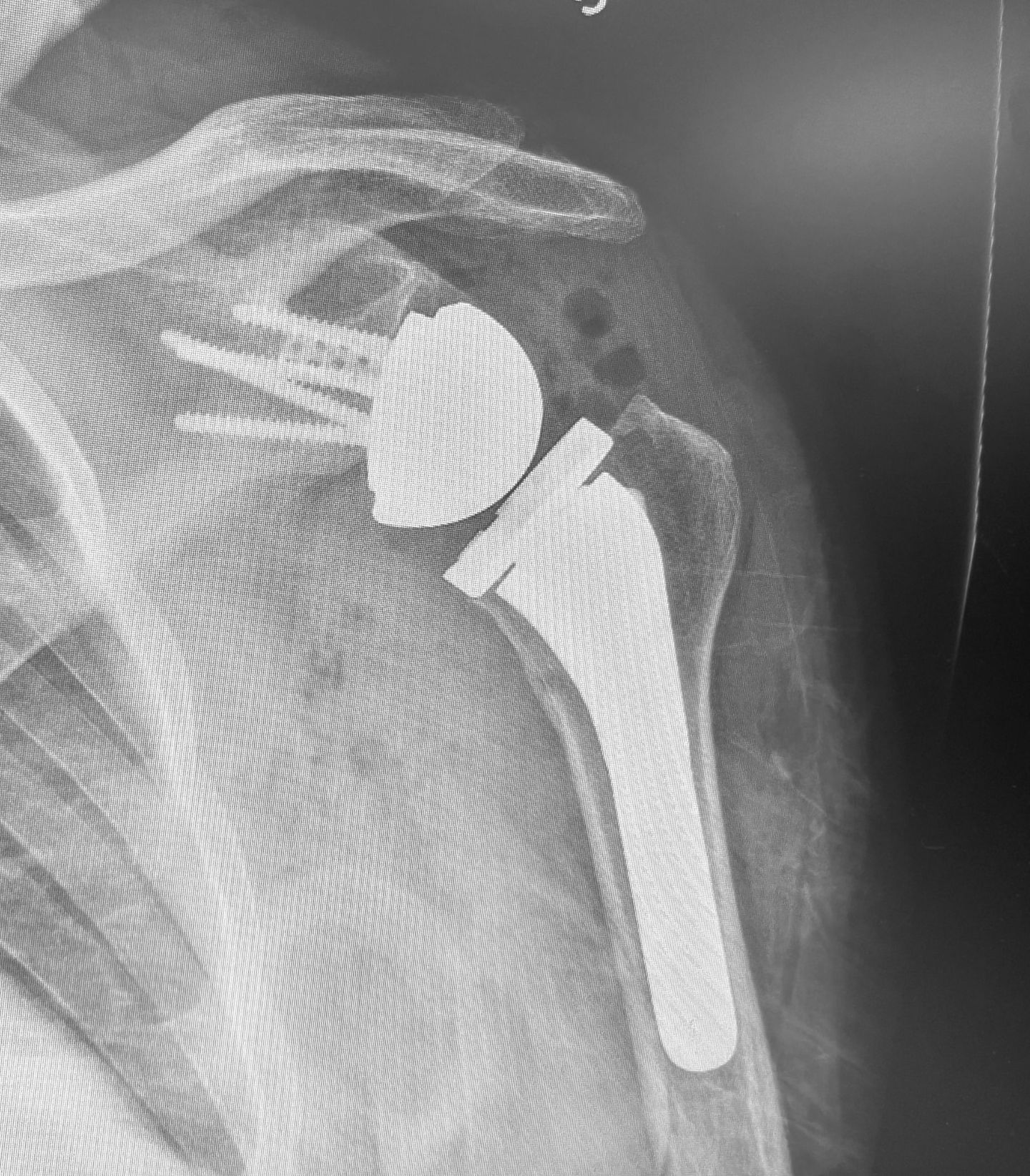
A worn shoulder joint is not a one-way door to the operating room. Early wear often settles with directed therapy, targeted injections and orthobiologics. When the joint is truly worn out, total shoulder replacement — anatomic or reverse — is one of the most reliably pain-relieving operations in orthopaedics.
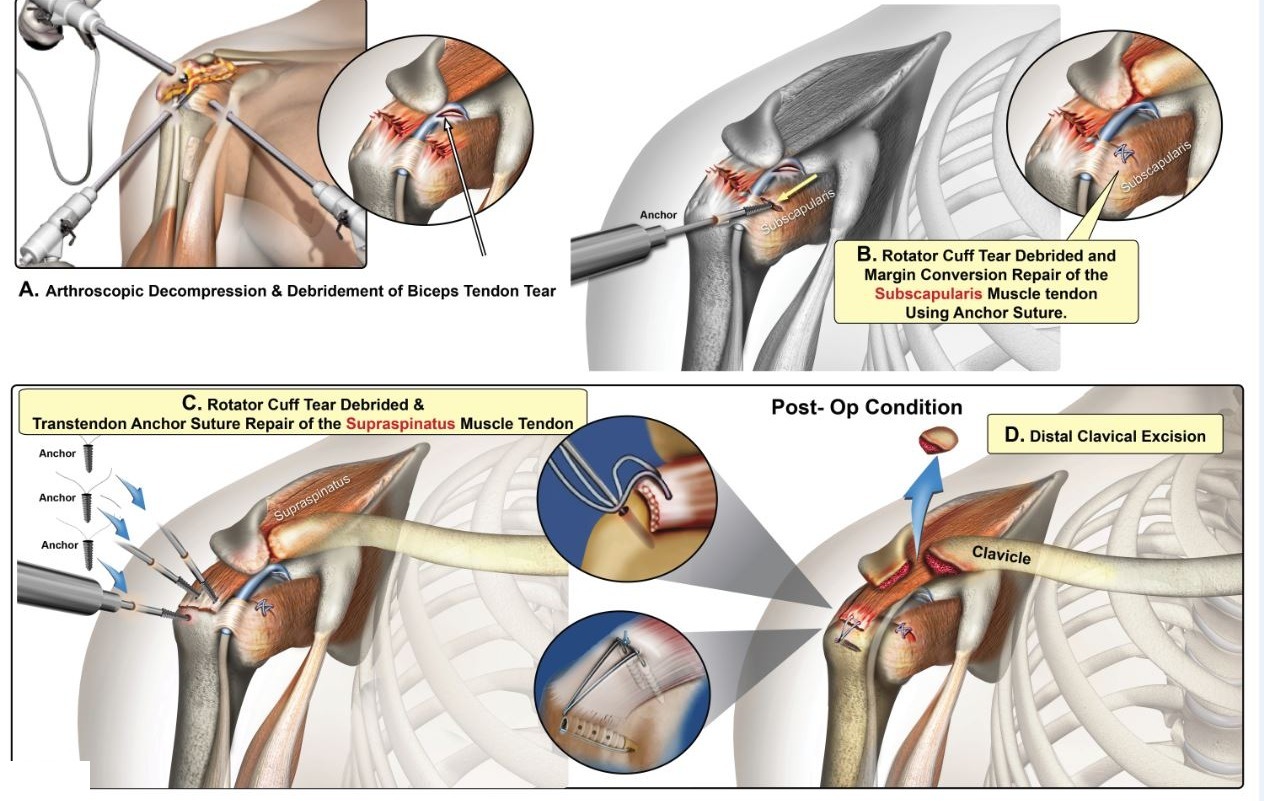
Arthroscopic rotator cuff repair, step by step — from debridement to anchor-suture repair and the final post-op result.
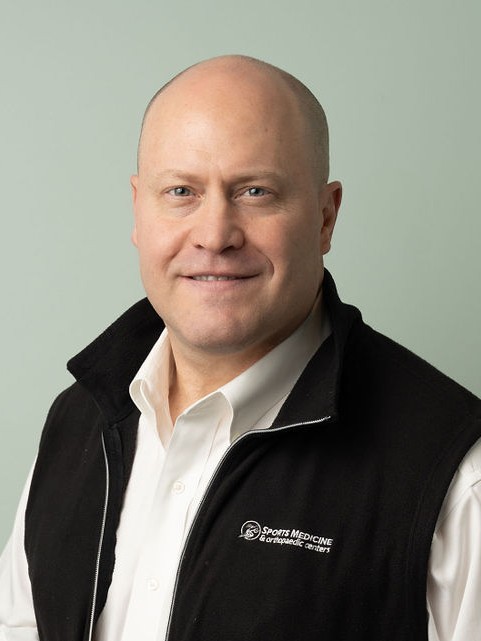
Board-certified orthopaedic surgeon with a certificate of added qualification in orthopaedic sports medicine and more than two decades of experience treating shoulder, knee and other sports injuries. His practice emphasizes orthobiologics and joint preservation, supported by imaging, office ultrasound and surgical experience so each option is considered in context.







Former team physician positions held across professional, collegiate and Olympic sports — many for years.


Dr. Woolf remains active with WTA and USTA events.
WTA Irving Glick Award, 2021
The Women’s Tennis Association’s annual award honoring outstanding contributions to sports medicine and excellence in athlete care — presented to Dr. Woolf after seven years as tournament physician for the Charleston WTA event, in recognition of his care, dedication and rapport with the tour’s athletes.
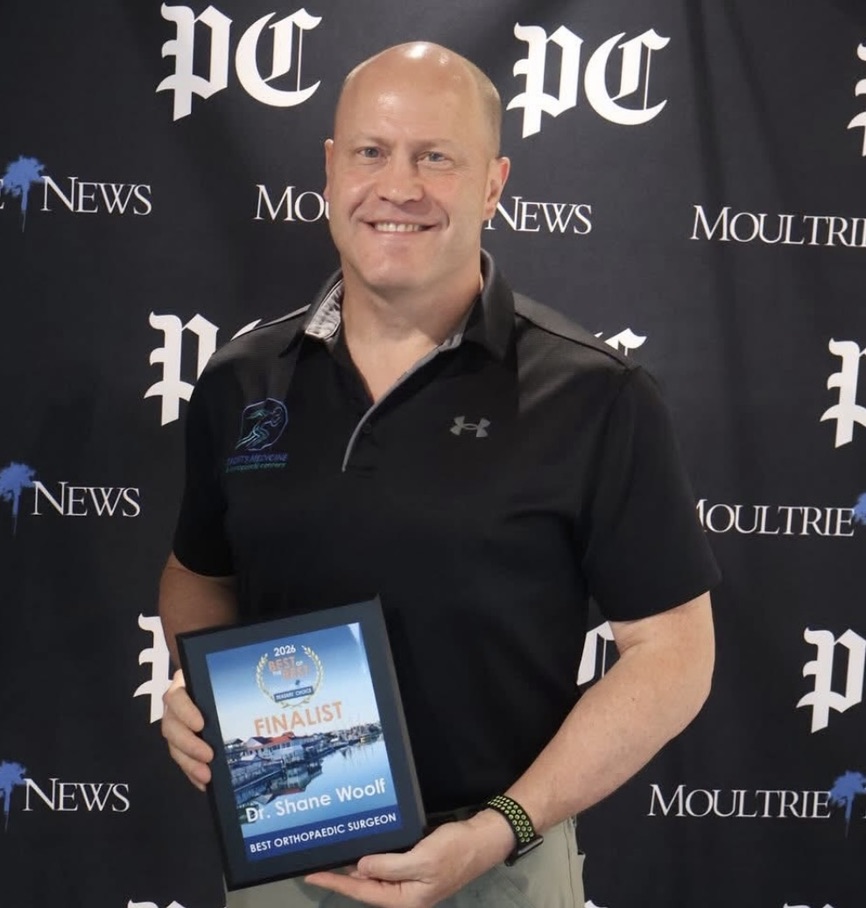
Finalist — Best Orthopaedic Surgeon, Mount Pleasant SC, 2026
Recognized among the top orthopaedic surgeons in the Mount Pleasant community by the Moultrie News / Post and Courier "Best Of" awards.
Dr. Woolf’s office is in Mount Pleasant, SC, at Sports Medicine & Orthopaedic Centers — 1230 Hospital Drive. All visits and procedures take place there.
Patients traveling from Charleston, Summerville, Beaufort/Hilton Head, Myrtle Beach and across the Lowcountry to the Upstate can be scheduled at the Mount Pleasant office.
Hours · Mon–Fri · 8:30a–5:00p
Map, hours & directions →Let's talk about what is holding you back, what you've tried and which next step makes sense for you.
Mon–Fri · 8:30a–5:00p · 1230 Hospital Drive, Mt. Pleasant, SC
Most major insurance plans are accepted, including Medicare. Orthobiologic treatments such as PRP are typically self-pay — the office will confirm your coverage and any costs before your visit.